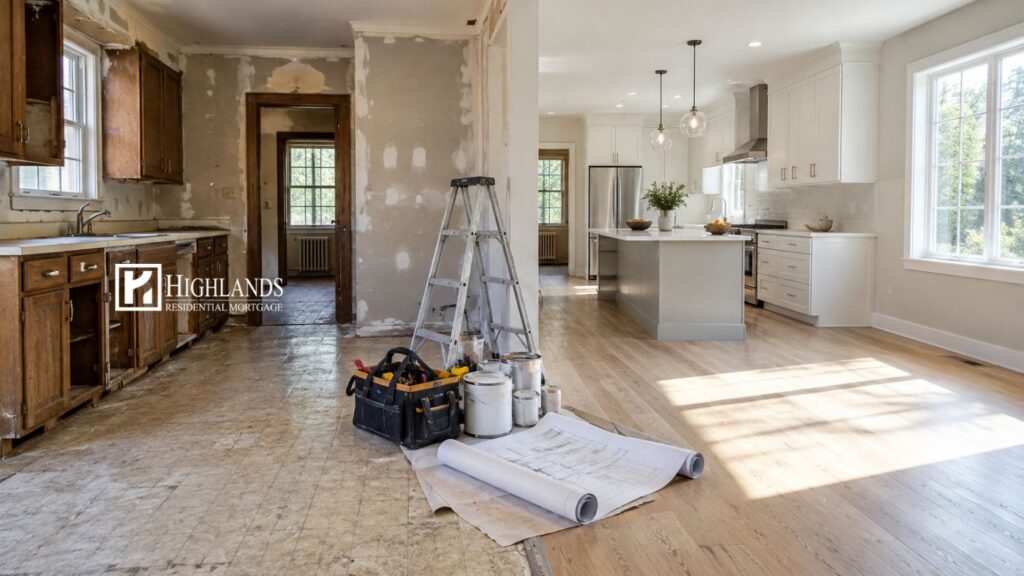

Walk into any open house right now and you’ll notice something: the move-in-ready homes get snapped up fast, and everything priced attractively… needs work. Dated kitchens. Original 1970s bathrooms. A roof that’s seen better decades. If you’ve been priced out of the “perfect” home but keep finding “almost perfect” ones with potential, a renovation loan might be the answer you didn’t know you had.
A renovation loan lets you finance the purchase price and the cost of repairs or upgrades in a single mortgage. No separate construction loan. No maxing out a credit card to redo the kitchen. Just one loan, one closing, one monthly payment. Here are seven secrets that can help you use this strategy to your advantage in 2026.
1. You Have Two Main Options: FHA 203k or HomeStyle
The two most popular renovation loan programs work a little differently, and picking the right one matters.
The FHA 203k loan, backed by the Federal Housing Administration, is popular with first-time buyers because it allows lower credit scores and a smaller down payment. You can learn more about program requirements directly from HUD’s official 203k overview.
The HomeStyle Renovation loan, backed by Fannie Mae, is a conventional option that tends to offer more flexibility on the types of renovations allowed — including luxury upgrades like pools — and can be used on investment properties, not just primary residences. Fannie Mae publishes full program details on their HomeStyle Renovation page.
Neither option is universally “better” — it comes down to your credit profile, down payment, and what kind of renovation you’re planning.
2. Not Every Renovation Qualifies
Both programs have rules about what the money can and can’t be used for. Structural repairs, kitchen and bath remodels, energy efficiency upgrades, and even accessibility modifications are typically fair game. Purely cosmetic luxury additions are more restricted under FHA 203k, while HomeStyle gives you more room. Before you fall in love with a renovation wish list, it’s worth having a conversation about what’s actually financeable.
3. You’ll Need a Detailed Scope of Work
Unlike a traditional mortgage where the lender just needs an appraisal, renovation loans require a specific, itemized scope of work — contractor bids, project timelines, and cost breakdowns. This isn’t a “figure it out as you go” loan. Lenders want to see exactly what’s being done, by whom, and for how much before they’ll approve financing. Having a licensed, experienced contractor lined up early in the process will save you weeks of back-and-forth.
4. The Appraisal Is Based on the Future Value
Here’s where renovation loans get interesting: the home is appraised based on its value after the renovations are complete, not its current as-is condition. That “future value” appraisal is what makes it possible to borrow enough to cover both the purchase and the repairs — something a standard mortgage simply can’t do, since a conventional appraisal only reflects the home as it sits today.
5. Funds Are Released in Stages, Not All at Once
Renovation loan proceeds for the repair portion typically sit in an escrow account and get released to your contractor in draws as work is completed and inspected — not handed over as a lump sum upfront. This protects both you and the lender, and it means your contractor needs to be comfortable working within a draw schedule. It’s a good idea to discuss this process with any contractor before signing a contract.
6. Timelines Run Longer Than a Standard Purchase
Because of the extra documentation, contractor coordination, and future-value appraisal, renovation loans generally take longer to close than a standard mortgage — often several weeks longer. If you’re competing for a fixer-upper in a hot market, it’s important to set expectations with the seller and your agent upfront about the realistic timeline, so nobody’s caught off guard.
7. Rate Buydowns and Down Payment Assistance May Still Apply
A common misconception is that renovation loans are a separate universe with their own rules for everything. In reality, many of the same tools available on a standard mortgage — down payment assistance programs and certain rate strategies — can often still be layered in depending on the loan type and your state. If you’re weighing whether a 203k or HomeStyle loan fits your financial picture alongside other financing routes, it’s also worth comparing against a standard FHA vs. Conventional purchase to see which path gets you to the finish line faster and more affordably.
Should You Consider a Renovation Loan?
If you keep finding homes with “good bones” in the right location but the wrong finishes, a renovation loan can be the bridge between what you can afford today and the home you actually want to live in. It’s not the right fit for every buyer or every project, but for the right situation, it opens doors that a traditional mortgage simply can’t.
If you’re eyeing a fixer-upper and want to know whether an FHA 203k or HomeStyle loan makes more sense for your situation, let’s talk through the numbers together. I want you to win!
John Robert Picinic
NMLS #134871 | 817.846.2800 | [email protected] | MortgagesByJohn.com
Licensed in Texas, Florida, Colorado, New Jersey, North Carolina, South Carolina, and Georgia.